We mapmakers earn our keep by somehow adding value to raw geographic data; that is, the craft requires more than just plotting the location of objects on the Earth’s surface. But sometimes it’s hard to compete with the simple elegance of a stripped-down display of geographic shapes. Some of my favorite images of that ilk are maps of city building footprints.
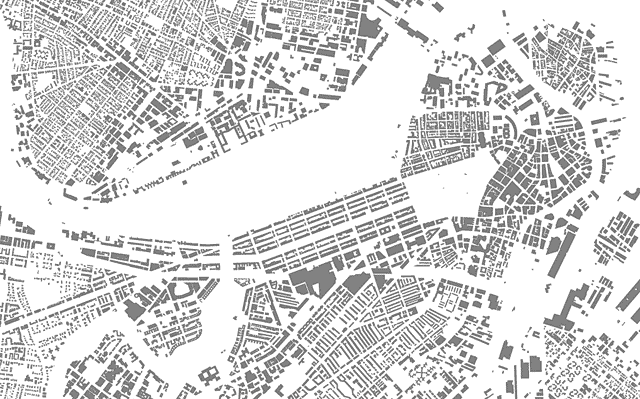
Or how about a much larger extent that includes most of the city?
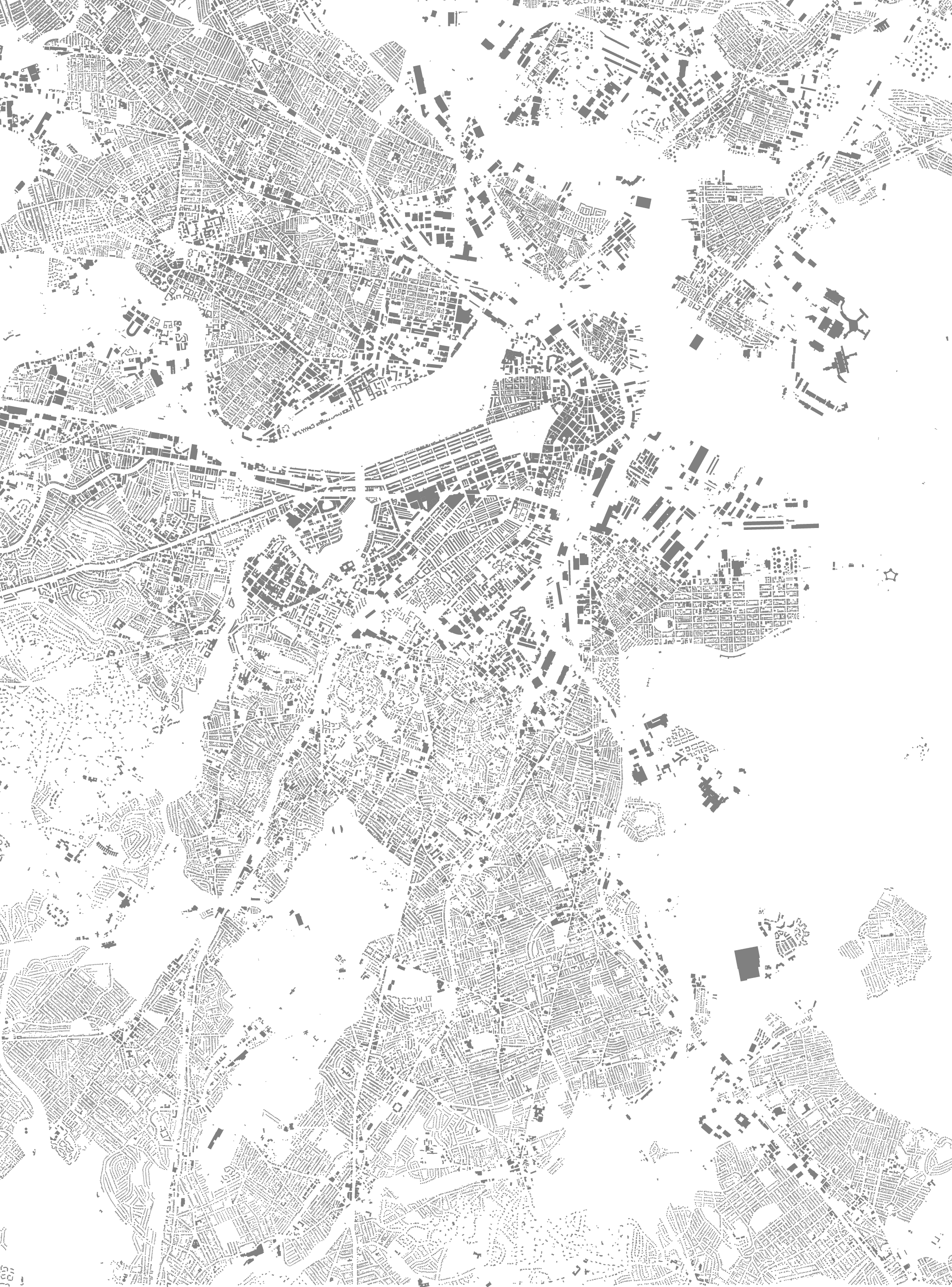
Despite the objections of some detractors (you know who you are, and I know where you live), there is some worth to this kind of map. Sure, there’s really nothing to it—the map was simply cranked out from MassGIS data. If nothing else, though, it’s kind of pretty, revealing the sometimes aesthetically pleasing patterns of the built environment.
Besides being inconsequential eye candy, though, the map is somewhat useful for interpreting urban geography. Some manmade patterns are much clearer in this map than in an aerial photograph you’d find on Google Maps or elsewhere, which shows all this and more. Assuming some base level of local knowledge (say, where the ocean is), it’s possible to identify various spaces: built-up (gray) versus open (blank) areas, downtown (large, dense footprints) versus residential (smaller, separated footprints) areas, steetcar suburbs (long main drags with density dropping a block or two away) versus more interior urban areas (consistent density and often smaller, straighter blocks), and so on.
But mostly it’s a pretty picture. I’m not alone in thinking so, right?
Pingback: Density | Bostonography